Publications
The Economics of Advice: Evidence from Startup Mentoring
Files: Main Paper | Supplemental Material
Presentations: AOM 2023, SIOE 2023, BYU-Utah Winter Strategy Conference 2023, Purdue Krannert 2023, UNC 2021, Chalmers 2021, CCC 2020
Management Science (2025)
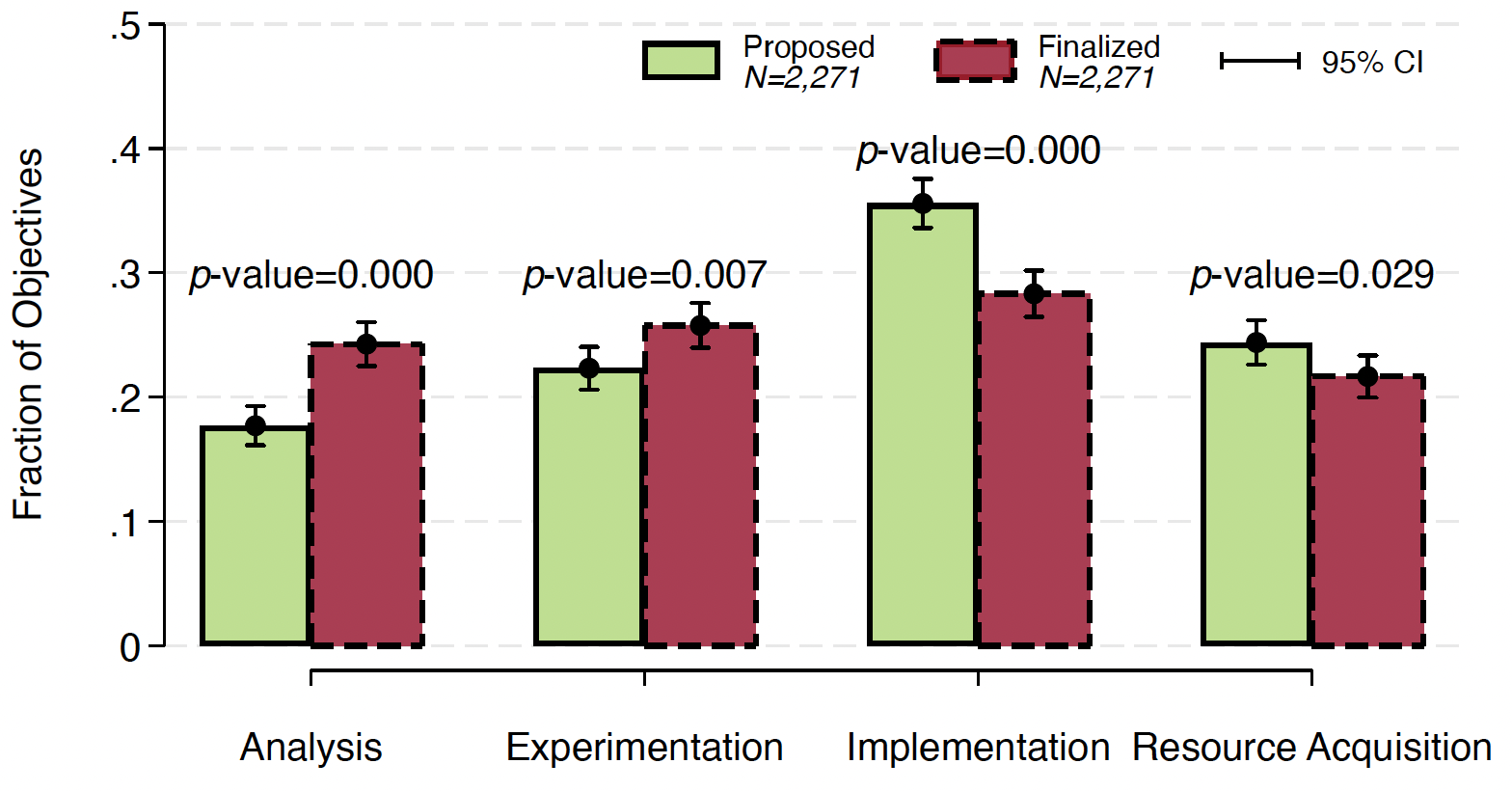
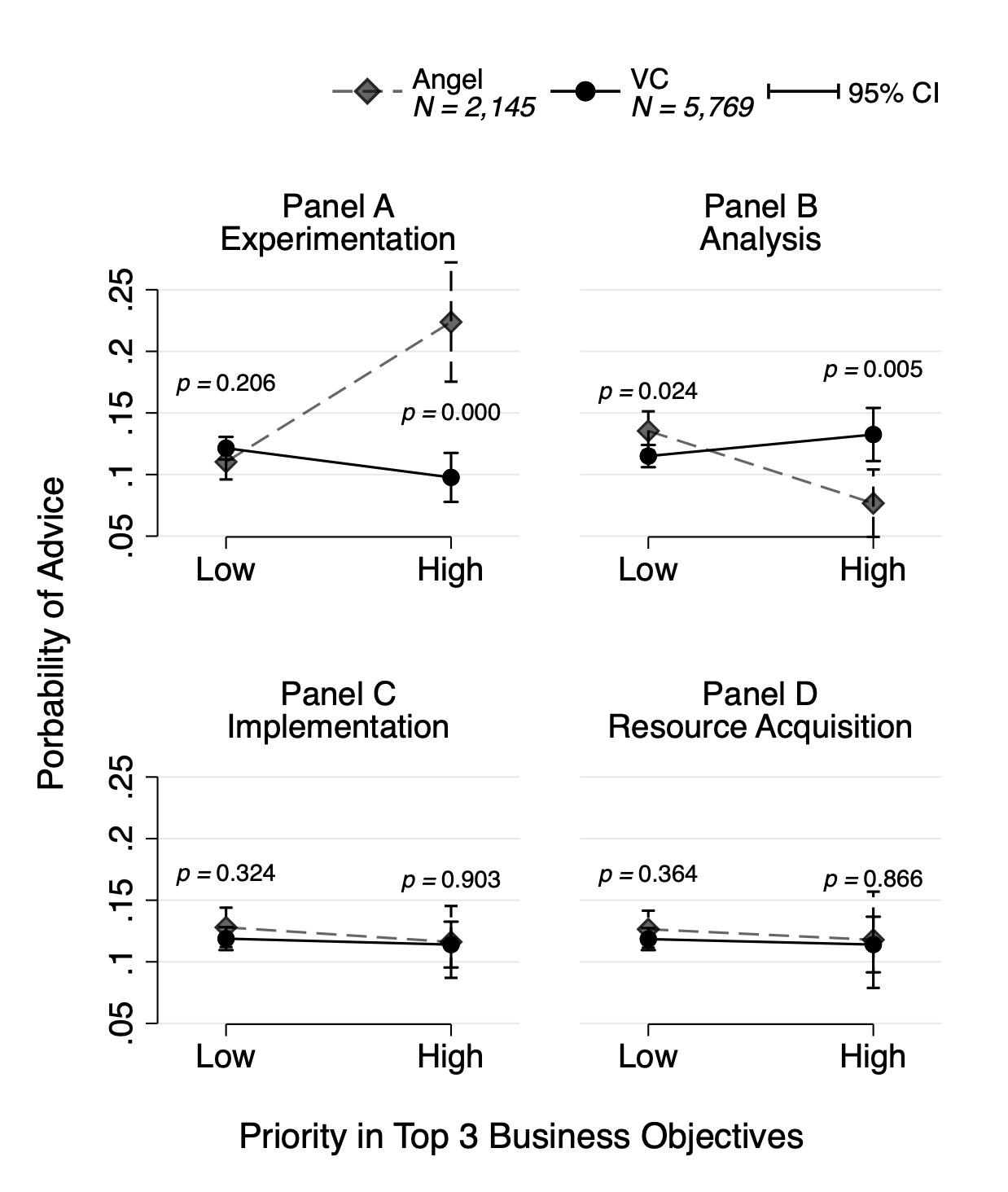
ABSTRACT: This paper examines the role of advice in early firm development and growth, drawing on detailed data from a global program where angel investors and venture capitalists (VCs) mentored founders over several months. Leveraging variation in mentors' availability to support start-ups because of personal scheduling conflicts, I find that advice significantly improves start-ups' future market performance. To explore how advice shapes early firm development, I develop a novel typology of start-up activities, finding that a defining element of mentors' advice is to do less and learn more. Although angels and VCs are consistent in this message, they differ significantly in when they choose to advise start-ups in achieving their business objectives. Angels are more likely than VCs to help founders design and execute product market experiments, whereas VCs provide more mentoring support on business analysis and planning tasks. I find evidence consistent with the hypothesis that experimentation is a skill developed via learning-by-doing, and angels have a skill advantage in that domain because of having more operational experience.
Information Frictions and Employee Sorting between Start-Ups
w/ Kevin Bryan and Mitchell Hoffman
Files: Published Version | Main Paper | Appendices | RCT Screenshots | AEA RCT Registry
Presentations: SOLE 2021, Barcelona School of Economics 2021, Duke SIE 2021, LBS 2020, Stanford 2020, I&I Conference 2019, UMass Amherst 2019, Columbia 2018
American Economic Journal: Applied Economics (2026)
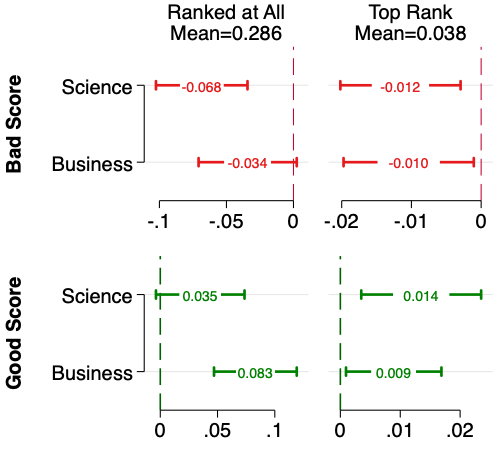
ABSTRACT: Would workers apply to better firms if they were more informed about firm quality? Collaborating with 26 science-based startups, we create a custom job board and invite business school alumni to apply. The job board randomizes across applicants to show coarse expert ratings of all startups' science and/or business model quality. Making this information visible strongly reallocates applications toward better firms. This reallocation holds even when restricting to high-quality workers. The treatments operate in part by shifting worker beliefs about firms' right-tail outcomes. Despite these benefits, workers make post-treatment bets indicating highly overoptimistic beliefs about startup success, suggesting a problem of broader informational deficits.
Working Papers
Marginal Ideas
w/ John Horton
Files: Latest Draft
Presentations: UMD SERF 2026, NBER SI Entrepreneurship 2026
(Under Review)
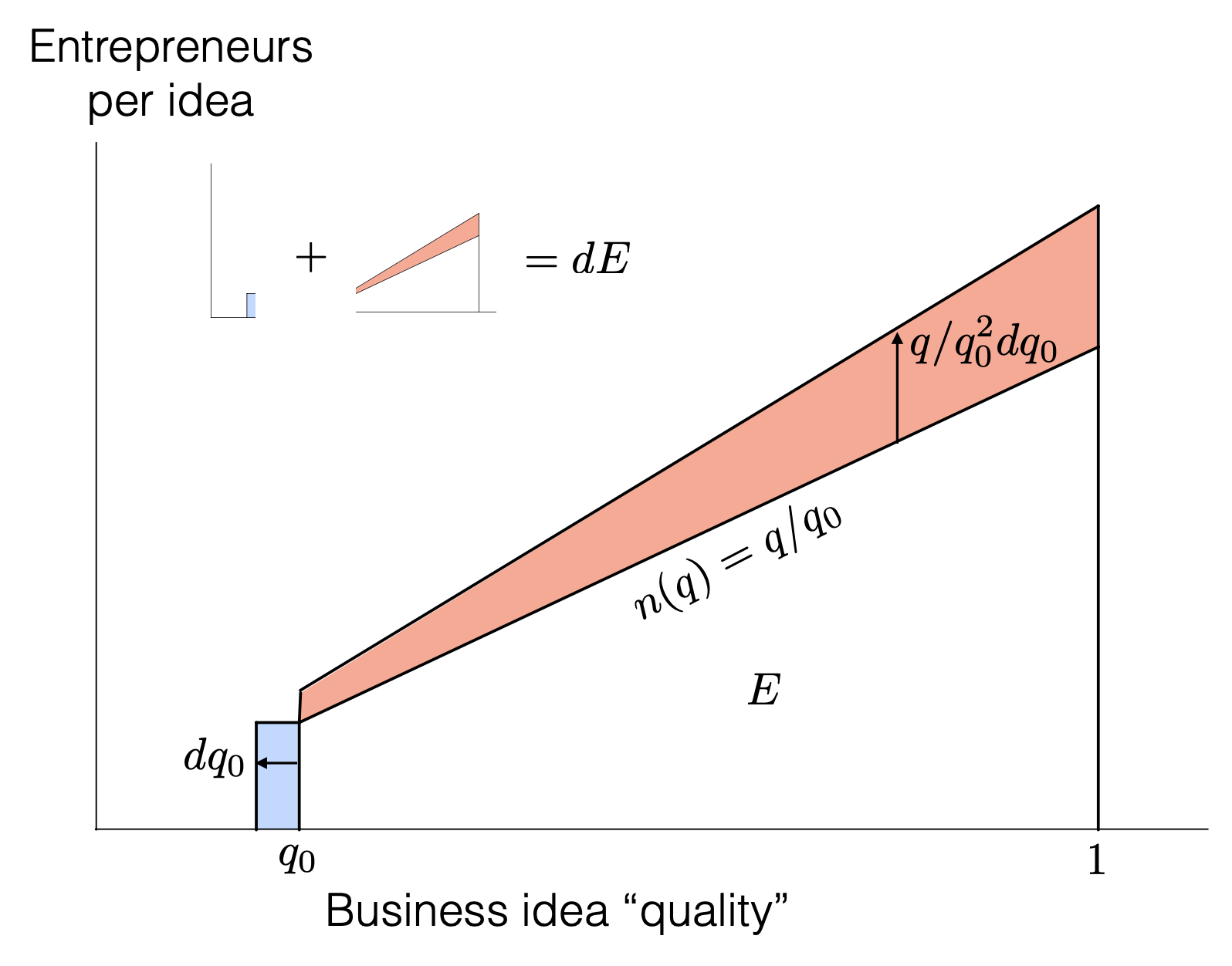
ABSTRACT: We develop a model in which startups are free to pursue any idea among a collection of ideas. This competition equalizes expected private returns across those ideas, despite differing in apparent ex ante quality. Workers can either found a startup or join a startup as an employee. Their choice equalizes expected returns across employment and entrepreneurship. We show that crowding is socially excessive on every idea except the “marginal idea” because entrepreneurs do not internalize business-stealing externalities. Because the business-stealing wedge grows with crowding, ideas that look unattractive ex ante have higher social returns at the margin. In fact, the marginal idea is the idea with the highest social return, and pushing the margin out—notably, through public R&D that expands the set of usable ideas—lessens congestion and improves efficiency. The model generates a sufficient statistic for social efficiency, which is the elasticity of startup success with respect to number of startup entrants. We compute this elasticity cross sectionally using data from 37,818 U.S. startups across 2,045 distinct ideas. We estimate a lower-bound of -0.18 for the elasticity of per-entrant success probability with respect to the number of entrants on an idea. This estimate grows to -0.86 in the sample of highly promising ideas, meaning that a 10% increase in entry on such ideas yields only a 1.4% increase in total successful exits.
How does Industry Affiliation of Academic Scientists Affect the Rate and Direction of Research?
Presentations: DRUID 2024, AOM 2019
(manuscript ready for conference presentation)
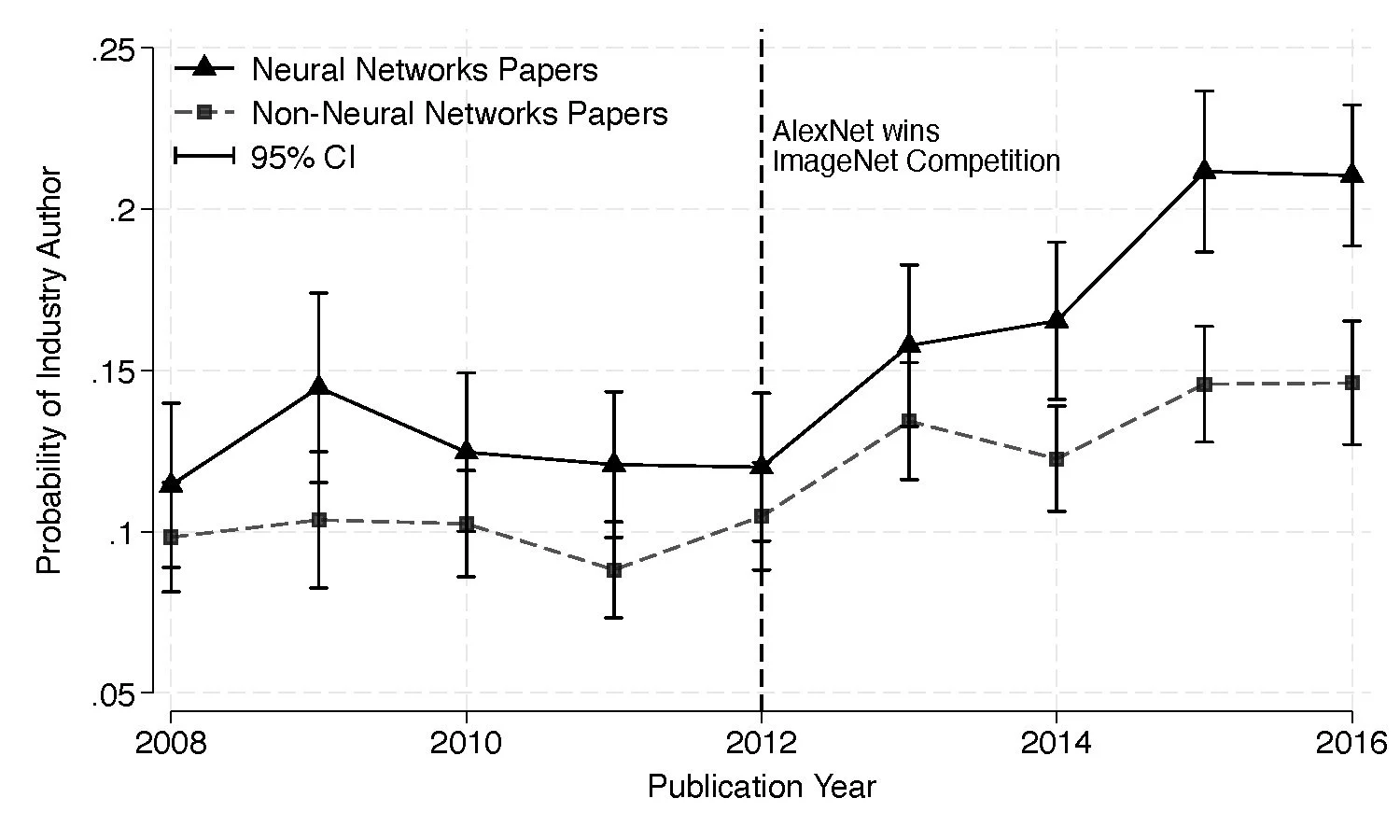
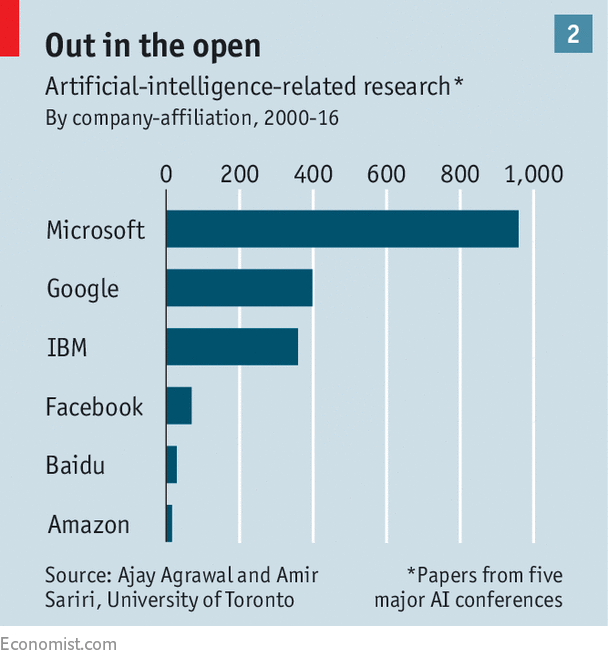
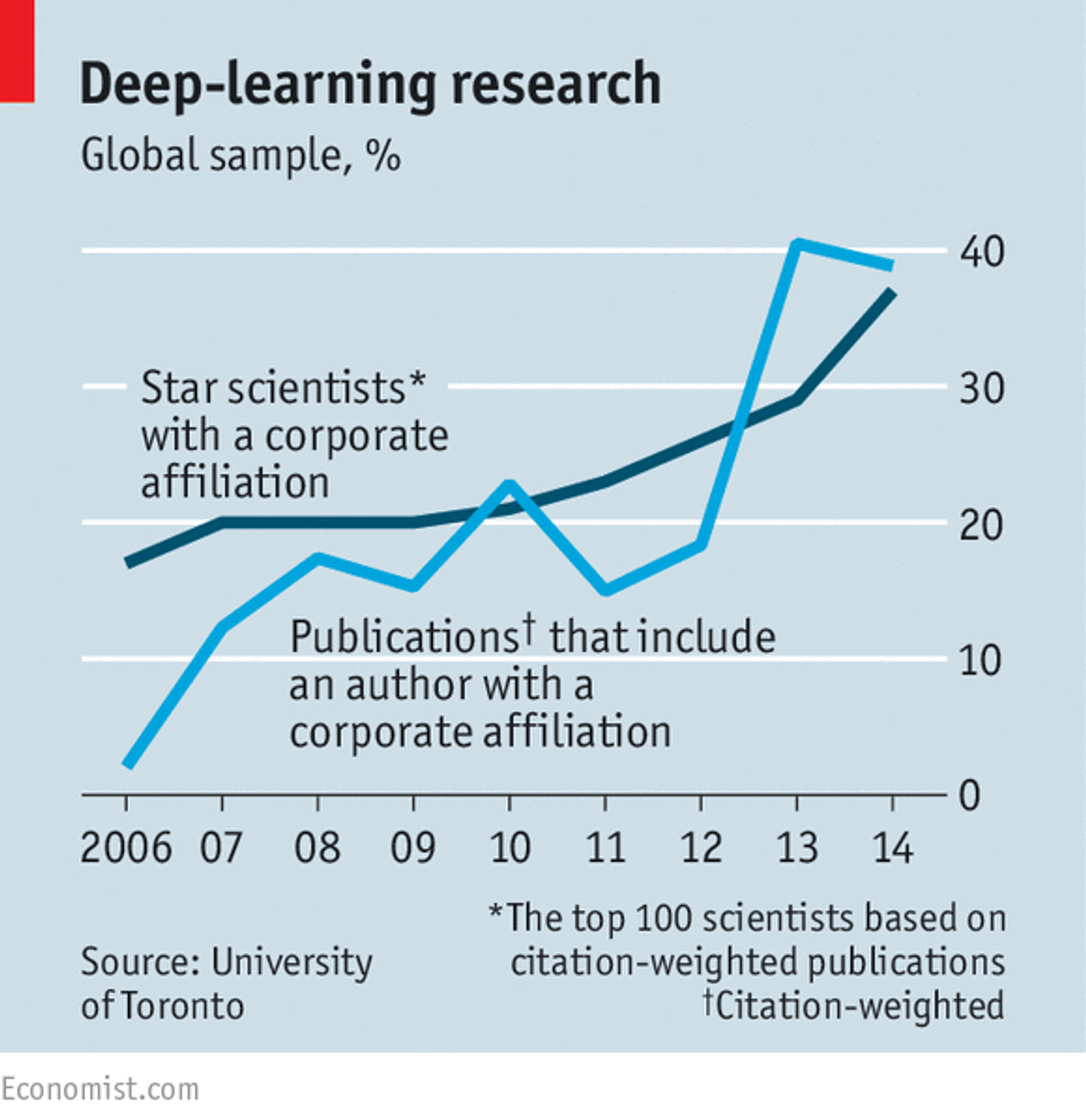
ABSTRACT: The implications of academic collaborations with industry have long been the nexus of contentious debate. The prevailing concern is that industry causes research to lose its fundamental depth and become commercially driven. This paper presents evidence that these concerns are misplaced for areas of research that have commercial value--that is, the specific domains for which these concerns are raised. The empirical analysis uses large-scale, manually improved bibliometric data from artificial intelligence research. For identification, I use the unexpected and significant success of the neural network techniques revealed at the ImageNet 2012 benchmark competition, which sharply increased the industry's demand for AI scientists, but more so for scientists with higher expertise in the breakthrough field. While industry affiliation significantly increases the usefulness of research, it does not diminish its novelty. In addition, industry affiliation raises both the publication and the quality of science produced by academic scientists. Results are consistent with the explanation that, at least in the medium term, academics in short supply can negotiate higher academic freedom while utilizing commercial resources for their research.
Media Mentions: The Economist - Million Dollar Babies | The Economist - Battle of the Brains
Activity Sequencing in Startups
w/ Jorge Guzman
(preparing manuscript for conference presentations)
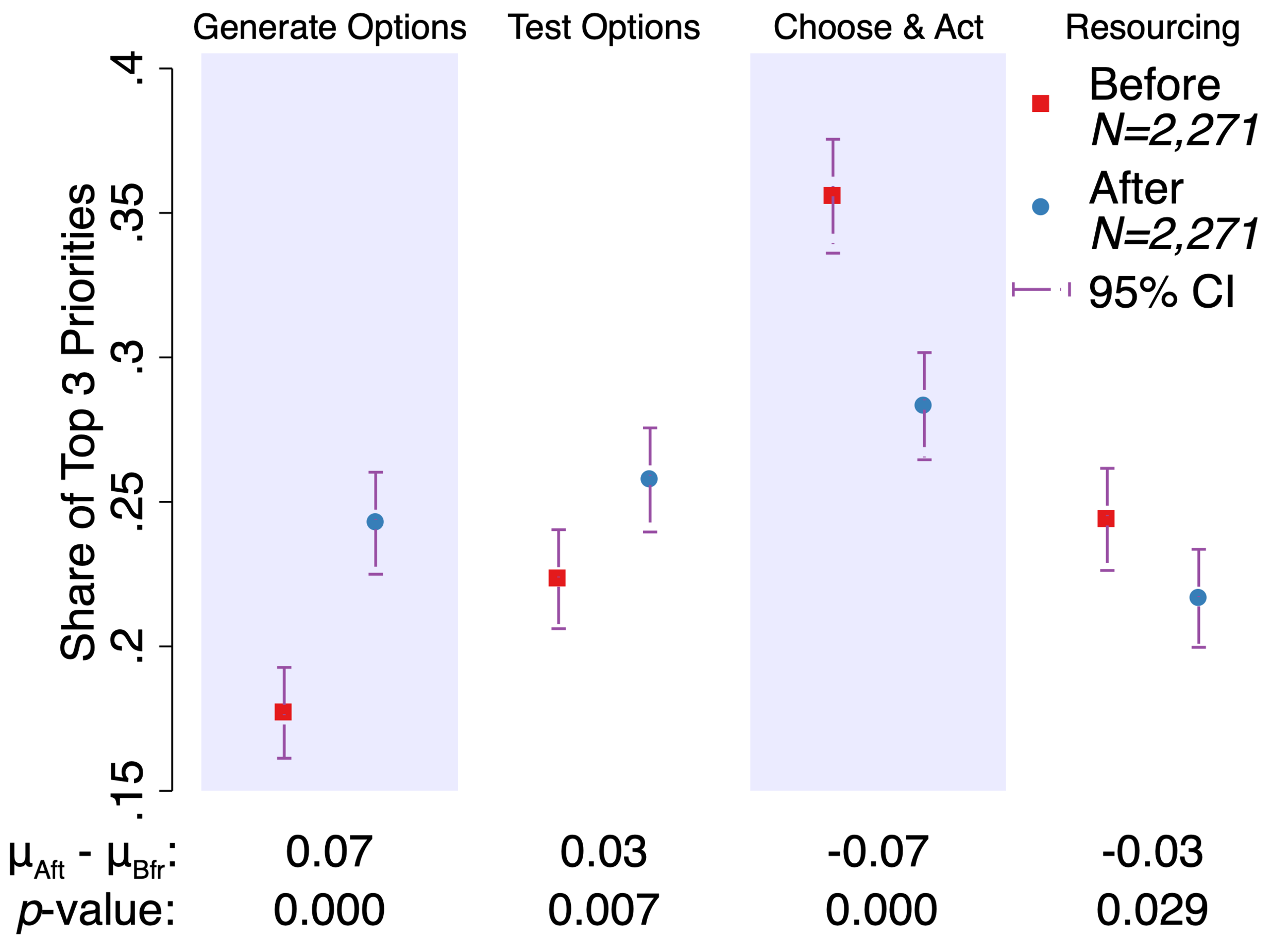
ABSTRACT: In this paper, we investigate the sequence of startup activities over time to understand the mechanisms underlying the prioritization of activities in startups. We leverage a novel typology of startup activities using a database early-stage, science-based startups. We show that entrepreneurs, particularly first-time founders, under-prioritize learning. Using Latent Markov Models, we show that the sequence of activities in early-stage startups from learning to implementation of ideas and acquisition of resources increases startups' success in accessing capital.
Work in Progress
[1] Scientific Decision-Making in Early Firm Formation and Growth, with Ajay Agrawal, Arnaldo Camuffo, Alfonso Gambardella, & Jakub Malachowski - data analysis
[2] The Effect of Disagreement on Learning: Evidence from Business Mentoring, with Luca Gius - preparing manuscript
[3] The Effect of Noisy Learning on Startup Performance, with Joshua Gans, Erin Scott, & Scott Stern - data analysis
Other Work
[1] Sariri, A., Gatov, E., Neal, G., Robinson, K., Sennik, S., Tham, W. Y., Vertolli, M., & Goldfarb, A. (2025, August). Database, methodological tools, and research opportunities: Creative Destruction Lab and early-stage technology ventures (NBER Working Paper No. 34127). National Bureau of Economic Research. https://doi.org/10.3386/w34127
[2] Sariri, A. (2020). Activity sequencing in startups. Academy of Management Proceedings, 2020(1), 280. https://doi.org/10.5465/AMBPP.2020.280
[3] Sariri, A. (2019). How industry affiliation of academic scientists affects the rate and direction of research. Academy of Management Proceedings, 2019(1), 19569. https://doi.org/10.5465/AMBPP.2019.19569abstract
Database Development
Database, Methodological Tools, and Research Opportunities: Creative Destruction Lab and Early-Stage Technology Ventures
w/ Evgenia Gatov, Kyle Robinson, Sonia Sennik, Michael Vertolli, Avi Goldfarb
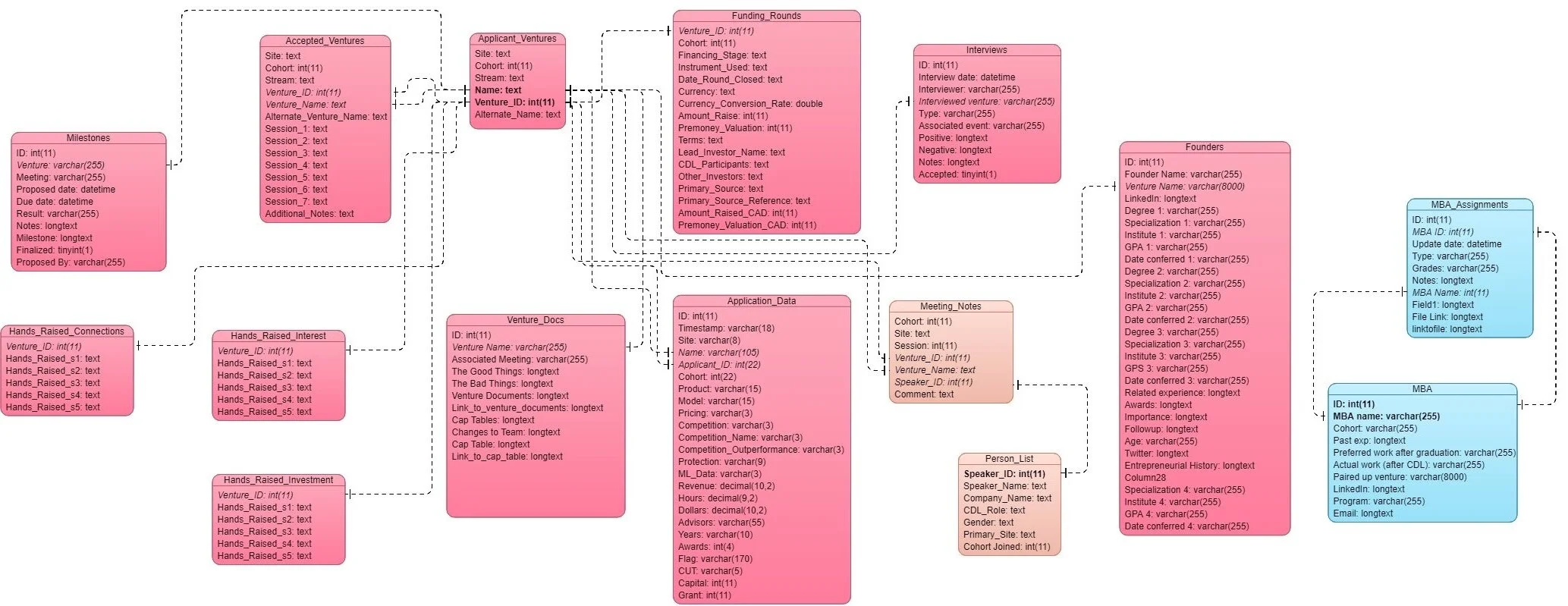
The early stages of startup formation remain one of the least understood aspects of firm development and growth. Decisions made during these formative periods often have irreversible consequences, shaping the trajectory and potential success of new ventures. However, these formative periods are also the most challenging to observe in a systematic way that allows rigorous empirical analysis. In this data collection project, we introduce new data built from Creative Destruction Lab (CDL), a global non-profit mentoring program for early-stage high-technology startups. We believe that the nature of this program and the richness of data we collected from its operations are particularly suited for investigating open questions in the economics and management of advice, entrepreneurial strategy, entrepreneurial finance, and the complex process of technology transfer.
As of 2024, there are 15 research projects that use these data by 18 scholars across Purdue University, University of Toronto, Harvard University, University of Chicago, HEC Montreal, HEC Paris, Dalhousie University, University of British Columbia, University of Calgary, and MIT. The projects that are published so far are:
- Amir Sariri; The Economics of Advice: Evidence from Startup Mentoring; Management Science, 2025
- Álvaro Parra, Ralph A. Winter; Early-stage venture financing; Journal of Corporate Finance, 2022
- Per Davidsson, Denis Gregoire, Maike Lex; Venture Idea Assessment (VIA): Development of a needed concept, measure, and research agenda; Journal of Business Venturing, 2021
This data collection project was a part of my doctoral dissertation research and was tremendously supported by guidance from my advisors Ajay Agrawal, Joshua Gans, and Avi Goldfarb. I also received funding and support from Creative Destruction Lab, the Strategic Innovation Fund of the Federal Government of Canada, and the RBC Royal Bank’s Borealis AI Foundation.
The Rate and Direction of Academic Research in Artificial Intelligence
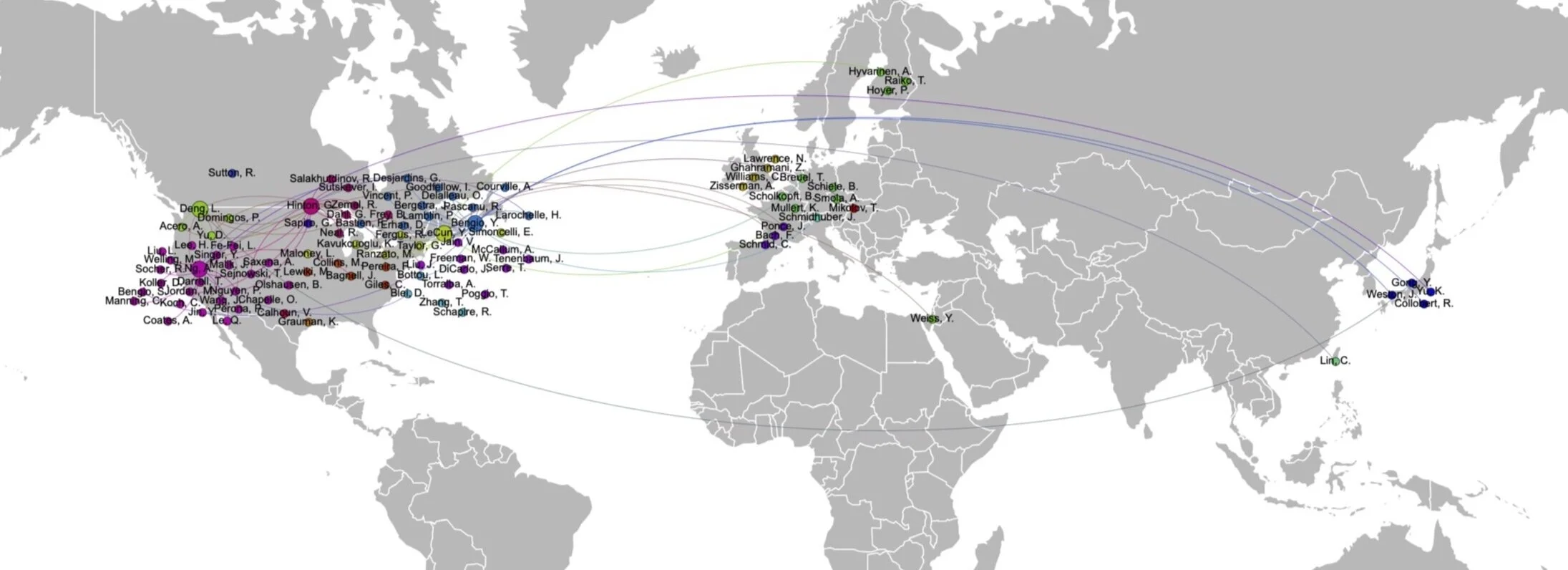
Ajay Agrawal and I collected data on a decade of conference proceedings of major AI conferences to understand how the state of the labor market for AI scientists and the distribution of scientific productivity has changed since the 2012 ImageNet Competition.
Findings from these data were presented to world leaders from government, industry, and the scientific community at the 2015 Future of Life Institute conference. For an overview on this conference see this Washington Post article.