Data
Database, Methodological Tools, and Research Opportunities: Creative Destruction Lab and Early-Stage Technology Ventures
w/ Evgenia Gatov, Geneva Neal, Kyle Robinson, Sonia Sennik, Wei Yang Tham, Michael Vertolli, Avi Goldfarb
Files: NBER Working Paper No. 34127
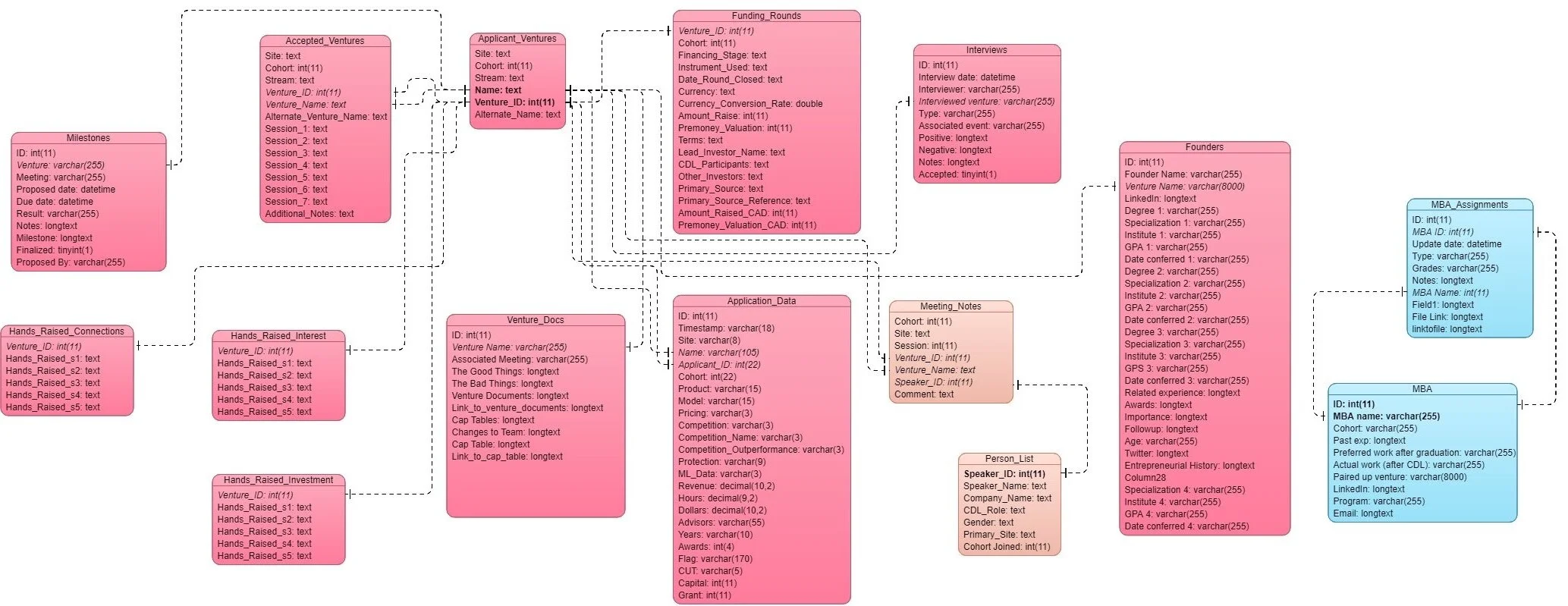
The early stages of startup formation remain one of the least understood aspects of firm development and growth. Decisions made during these formative periods often have irreversible consequences, shaping the trajectory and potential success of new ventures. However, these formative periods are also the most challenging to observe in a systematic way that allows rigorous empirical analysis. In this data collection project, we introduce new data built from Creative Destruction Lab (CDL), a global non-profit mentoring program for early-stage high-technology startups. The data cover roughly 15,000 applicants, 9,000 founders in admitted startups, and nearly 2,000 mentors across 27 technological domains, such as therapeutics and quantum computing. We believe that the nature of this program and the richness of data we collected from its operations are particularly suited for investigating open questions in the economics and management of advice, entrepreneurial strategy, entrepreneurial finance, and the complex process of technology transfer.
As of 2026, there are 15 research projects that use these data by 18 scholars across Purdue University, University of Toronto, Harvard University, University of Chicago, HEC Montreal, HEC Paris, Dalhousie University, University of British Columbia, University of Calgary, and MIT. Research that uses these data includes:
Published
- Kevin A. Bryan, Mitchell Hoffman, Amir Sariri; Information Frictions and Employee Sorting between Start-Ups; American Economic Journal: Applied Economics, 2026
- Amir Sariri; The Economics of Advice: Evidence from Startup Mentoring; Management Science, 2025
- Mehrsa Ehsani, Oleksiy Osiyevskyy; Founders’ Formula: Scientists and Venture Financing Dynamics; Academy of Management Proceedings, 2025
- Greg Nyilasy, Shangwen Yi, Dennis Herhausen, Stephan Ludwig, Darren W. Dahl; Business-to-Investor Marketing: The Interplay of Costly and Costless Signals; Journal of Marketing, 2025
- Álvaro Parra, Ralph A. Winter; Early-stage venture financing; Journal of Corporate Finance, 2022
- Per Davidsson, Denis A. Grégoire, Maike Lex; Venture Idea Assessment (VIA): Development of a needed concept, measure, and research agenda; Journal of Business Venturing, 2021
Working Papers
- Francis de Véricourt, Huseyin Gurkan; Enhancing Deep-Tech Innovation: An Equilibrium Analysis of Joint Ventures; Working Paper, 2024
- Mohaddeseh Heydari Nejad; A structural model of mentorship in startup accelerators: Matching, learning, and value creation; Working Paper, 2024
- Mari Sako, Matthias Qian; A Taxonomy for Technology Venture Ecosystems; Working Paper, 2021
Teaching Case
- Karim R. Lakhani, Hong Luo, Laura Katsnelson; Market for Judgement: The Creative Destruction Lab; Harvard Business School Case 719-479, 2019
Data access: researchers can apply to Creative Destruction Lab for access to the de-identified data for academic use. The application process is described on CDL’s research page.
This data collection project was a part of my doctoral dissertation research and was tremendously supported by guidance from my advisors Ajay Agrawal, Joshua Gans, and Avi Goldfarb. I also received funding and support from Creative Destruction Lab, the Strategic Innovation Fund of the Federal Government of Canada, and the RBC Royal Bank’s Borealis AI Foundation.
The Rate and Direction of Academic Research in Artificial Intelligence
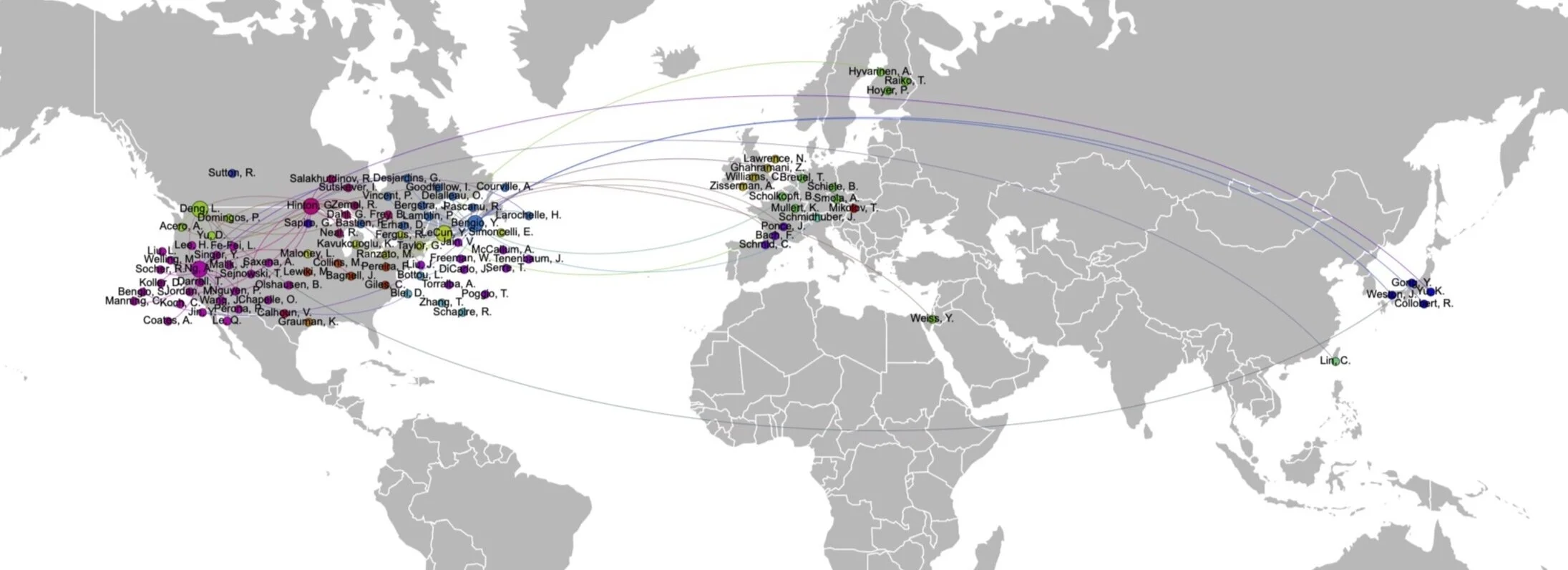
Ajay Agrawal and I collected data on a decade of conference proceedings of major AI conferences to understand how the state of the labor market for AI scientists and the distribution of scientific productivity has changed since the 2012 ImageNet Competition.
Findings from these data were presented to world leaders from government, industry, and the scientific community at the 2015 Future of Life Institute conference. For an overview on this conference see this Washington Post article.